Let's face it: On-site monitoring has a number of drawbacks. Unless there is a consistent human presence in any business or warehouse, the sole use of "on-site monitoring" fails to capture important benefits that are typically derived from temperature monitoring systems. There must be a hybrid of information streams, in which both onsite and offsite employees are informed of temperature fluctuations and/or related failures. These are 3 of the most common tools for remote temperature monitoring, all of which are provided by the collection of temperature sensor vendors in the marketplace. Be sure to utilize at least one of these remote options to provide access for "out-house" personnel. For vaccines, the CDC recommends a digital data logger that records temperatures continuously, rather than a check made only when someone is on site. Text/E-mail/Cell Alerts Although this is standard fare for most temperature sensors, the true value in 'alerting' via text, e-mail or phone calls is relatively straightforward. These alerts are three distinct notification streams that can be sent to the necessary personnel, whether they're on-site or in a remote location. In contrast to a mobile …
Posts about Asset Health (4)
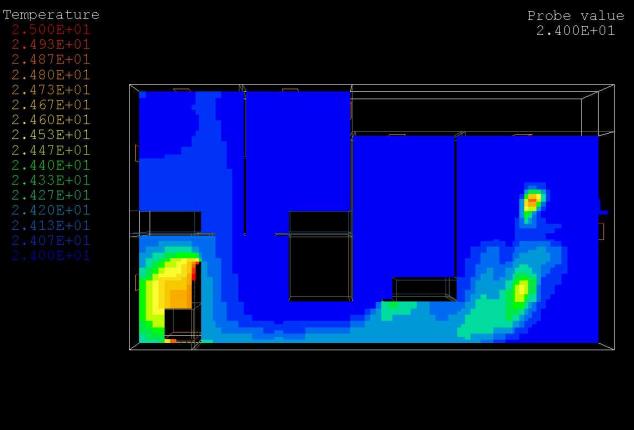
You need enough temperature sensors to cover the warmest and coolest points that affect your product, since a room or a refrigerator does not have one temperature. A few sensors in different locations is a good start, because too many readings create noise and one sensor can miss a swing of several degrees. What is the temperature in the room you’re in right now? Take a guess, you’ll be correct within a few degrees. Now, what is the temperature of the room? Don’t bother answering that, it’s a trick question because in fact there is no “temperature of the room”, the temperature of the room is a 3D matrix that likely varies by up to 3°C (5.4°F) from one point to another. In spaces as different as commercial refrigerators and data centers, temperature differences can be even greater. Computer modeling demonstrates how, in a data center, server racks can be cool at the bottom and hot near the top. Commercial refrigerators can have very cold areas near the chilled air outlets. Whether or not the temperature variations are meaningful depends on what they impact. Consider the last time you turned your refrigerator down a little and noticed the next morning the milk container in the …
Historically, monitoring of temperature-controlled environments has been one of the most important factors to monitor for sensitive applications. Whether you’re monitoring server rooms to tell when the AC goes off and jeopardizes costly IT equipment and data servers containing valuable information, or a medical office refrigerator containing perishable vaccines, temperature is one of the most critical parameters to monitor to keep things safe. Temperature Monitoring in IT Server Rooms With the advent of low-cost solid state Relative Humidity (RH) sensors, customers with many, diverse applications are reviewing their decision about monitoring humidity as a parameter that may be needed to protect product quality or safety. For example, the temperature monitoring of IT servers is generally managed by an air-conditioned room, so temperature and humidity are kept at safe levels. However, a closer look at servers operating in summer months in humid environments has demonstrated that the AC is working very hard to keep temperatures at thermostat set points. Humidity Alerts for Temperature-Controlled Environments While temperatures are maintained within safe operating levels for the most …
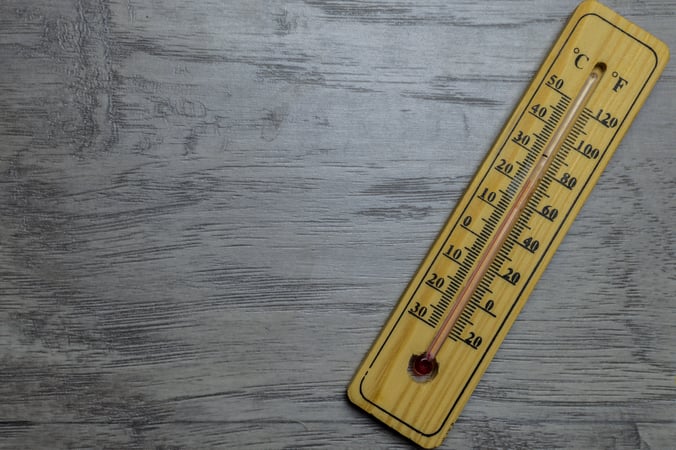
"Why is the temperature on my thermostat different than my SmartSense device?" We get asked this question a lot. Your thermostat may display one temperature while your SmartSense sensor might display something different. How can that be? It's because temperature in any location is a constantly changing 3 dimensional gradient. To ensure accurate temperature monitoring, ask yourself: What am I trying to monitor the temperature of? It seems like a silly question, but what are you actually trying to measure? Are you trying to take the temperature of the air in a room? Are you trying to measure the temperature of food in a refrigerator? How will your monitoring system be set up? These are factors to consider when looking at temperature monitoring systems, because some are designed for specific applications and environments. What kind of thermometer do I need for my monitoring? This question will help you decide what kind of temperature monitoring you need. Some thermometers have accuracy of within 0.01 degrees Celsius, while others may be within 10 degrees Celsius, so depending on what it you’re measuring, one might be more effective than another. You may also need …