
The Industrial Internet of Things (IIoT), also known as Industry 4.0, has received a lot of media hype in recent years. This movement entails connecting and monitoring equipment, vehicles, and other hard assets within a company’s aggregated information network to enable additional organizational insights, efficiency, and control. The benefits are clear for multiple industries. However, few vendors offer tangible products and services to enable the complete vision. In this series, we’ll offer practical advice to prepare your business for the IIoT and provide tips to select an IIoT platform. Future series will focus on specific industry solutions and more detailed examples of real-world IIoT deployments. A connected enterprise allows an organization to have more comprehensive, accurate, and immediate visibility into the inner workings of the company. This enhanced visibility enables a variety of benefits, which can lead to greater product quality at a lower cost as well as better customer service. Here are the primary benefits of a connected enterprise: Enhanced Decision-Making Additional organizational insights allow for more effective decision-making at all levels. For example, engineers on the shop floor can be alerted when equipment isnt performing optimally or goes out of service completely. This gives the ability to fix any problems quickly or preferably before a problem even occurs. More proactive decision making can be facilitated by predictive modeling. For example, the historical performance of equipment can be used to predict when maintenance activities should be performed to prevent downtime and to maximize the life of the equipment. Future equipment purchases can be based on the historical performance and maintenance data of specific brands of equipment. Increased Operational Efficiency There are various types of operational efficiency that can be achieved with a connected enterprise. This includes productivity gains, supply chain automation, energy conservation, regulatory compliance (e.g. safety, environmental) adherence, and logistics enhancements. For example, in the industrial gas industry, tanks need to be refilled on a periodic basis. Sensors …
Posts about Manufacturing (2)
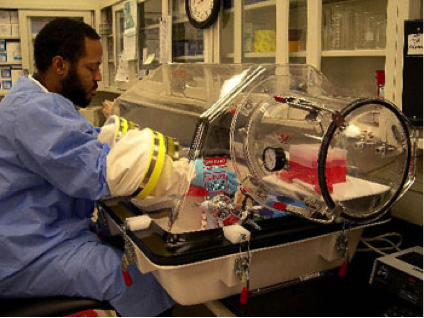
Pneumonia, measles, and malaria kill nearly two million people on the continent of Africa every year. Comparatively, the U.S. had 55 thousand deaths from pneumonia, with measles and malaria being a non-issue. One of the few means of prevention lie in vaccines and other preventative measures. Determining relationships and optimizing stability from production to administration is a vital part of success against the war on disease. But how does it work? How can one be sure a vaccine is well researched, properly attenuated, and stabilized? This series details the process of crafting these life-saving products and how they are able to reach locations globally. Vaccine manufacturers are subject to strict safety protocols and processes; if a product is poorly produced or guidelines are improperly followed, it could be a wasted investment –especially when people’s lives hang in the balance. How are vaccines manufactured? Vaccines are produced in several different forms –often as weakened or inert versions of the virus to be treated. Vaccines are designed to force an immunological response to the disease, and activate Memory B cells to create specific antibodies in case a person is exposed to the virus or bacteria again. Before a vaccine can be made, researchers must spend time isolating and studying the virus or bacteria in question and learning how it causes disease. Researchers then begin studying how to prevent the disease, keeping it in an isolated, sanitary environment. There are three phases of studies: Phase I, Phase II, and Phase III that need to be completed before the vaccine can be used by the general population. Phase I trials determine if the product produces an immunological response, where Phase II and III studies use increasingly larger populations for the sake of determining the safety and overall efficacy of the vaccine. Once strains have been isolated from blood samples, viruses are carefully replicated in a cell factory with a growth medium. The virus must be free of impurities, including other similar viruses and even variations of the same type of virus. Most vaccines must be kept under ideal conditions, often between 35°F and 45°F. Otherwise the …