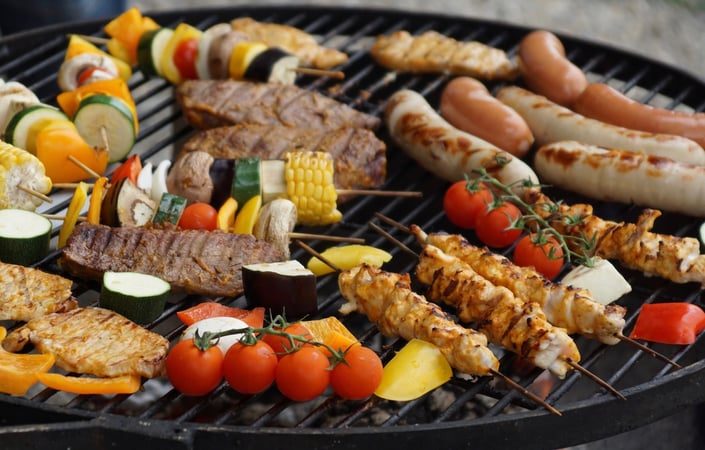
Food poisoning. No one wants to hear those words, let alone suffer through it, or witness a family member endure the ill effects. As we head into Labor Day weekend, don’t let warm weather negatively impact your food safety and put a damper on your outdoor activities. Labor day is quickly approaching, which means cookouts, camping, tailgating, and enjoying the great outdoors, often inclusive of food consumption. Food poisoning not only causes severe discomfort, inconvenience, and stomach trauma, it also accounts for 48 million illnesses, 128,000 hospitalizations and 3,000 deaths annually in the United States – and cases hit record highs as the weather warms up. Normally, the immune system is strong enough to fight off the bacteria within a week, however, the very young and elderly may face …
Articles from SmartSense by Digi
Recent Posts
For the rules that apply now, start with Key Federal Food Safety Laws: A Complete Compliance Guide (Updated 2026). The Food Safety Modernization Act (FSMA), signed into law in 2011, put emphasis on proactive management of food safety. This helped to drive additional methods of ensuring that perishable foods were kept at proper temperature throughout the cold chain. Specifically, the Sanitary Transportation of Human and Animal Food impacted a few areas: vehicles and transportation operations, staff training, and record keeping. These initiatives help to validate that perishables were help at proper temperature for inspection purposes, and provide best practices that help to minimize food safety risk. Now that you’re compliant, how do you unlock FSMA’s full potential? From Perceived Cost to …
Telematics has transformed the supply chain in significant ways. From improving road safety through automatic driving assistance, to simplifying navigation realized from GPS technology, transportation companies have embraced telematics as a way to enhance vehicular technology and improve fleet management. The “Moving Ahead for Progress in the 21st Century Act,” or commonly referred to as MAP-21, includes regulation mandating the use of electronic logging devices (ELDs). This has provided a means for trucking operators to improve compliance through technology, leading to an increased demand for telematics solutions. This regulation, along with improvements in logistics technology, has eased fleet management and improved supply chain operations. However, telematics can be taken one step …
That A, B, or C posted in the window tells you more than you might think. Here's what restaurant inspection grades actually mean, and what operators need to know to keep theirs as high as possible. Why restaurant health inspection grades matter more than ever You've probably walked past a restaurant window, spotted a B grade, and paused for half a second. Should you go in? Is it fine? What does a restaurant letter grade like a B actually mean compared to the A posted on the place next door? Those are fair questions, and the answers matter more than ever. Americans spend more than half of every food dollar on meals prepared outside the home, which puts a lot of trust in kitchens we can't see. According to the CDC, roughly 48 million people in the U.S. get sick from a foodborne illness …

In the mid-nineties, Jeff Bezos founded Amazon to sell one of a few promising categories of products: compact discs, computer hardware, computer software, videos, or books. His decision to revolutionize the way we purchase books would prove to have a cascading effect on expectations with online shopping. Due to its successful venture into becoming the world’s biggest bookstore, Amazon was able to pivot and carry a huge catalog of products, ranging from clothing and accessories to automotive equipment. Amazon helped to accelerate ecommerce, changing consumer expectations and improving business processes along the way. These two areas have had a huge impact on the supply chain. Without successful integration of delivery services and advanced supply chain management, many of Amazon’s unique …
Although the term “AI” usually reminds us of futuristic scenarios made popular by science fiction, the use of robotic function in food service surprisingly commenced more than a hundred years ago when vending machines first appeared in 1897. We’re now starting to see a significant acceleration in food service automation like never before. New technologies are transforming the way restaurants, food processors, and food distributors are providing food to their customers, specifically in activities that require speed, consistency, repetition, and sanitary controls. New entrepreneurial companies are patenting machines that do everything from cooking and serving meals to packaging, inventory management, and deliver services. Here are some new AI applications recently making the news: …