If you’re in charge of food safety for a chain restaurant you probably ask yourself the same question every day, “Is our food being stored and handled properly to ensure compliance?” Across all your locations, you’re not likely to find someone with the answer you need. But, there is an FDA study that can point you in the right direction.
Ensuring safe food is an important public health priority.
For years, regulatory and industry food safety programs have focused on reducing the incidence of foodborne illness caused by harmful bacteria and other pathogenic microorganisms. Yet it seems more and more headlines tell a different story; recalls, hospitalizations, and deaths. In other words, food safety remains a significant public health problem in the United States.
NPR Study: From Farm to Table
In 1996, The National Performance Review (NPR) seriously addressed food safety issues in their report, Reinventing Food Regulations. The NPR looked at the occurrence of foodborne illness along a farm-to-table continuum—a Big Picture that did not focus on individual sectors along the chain. It was a great start, but what foodservice and retail food store facilities needed was a study that would specifically assess their segments of the industry.
FDA Study: Foodservice and Retail Food
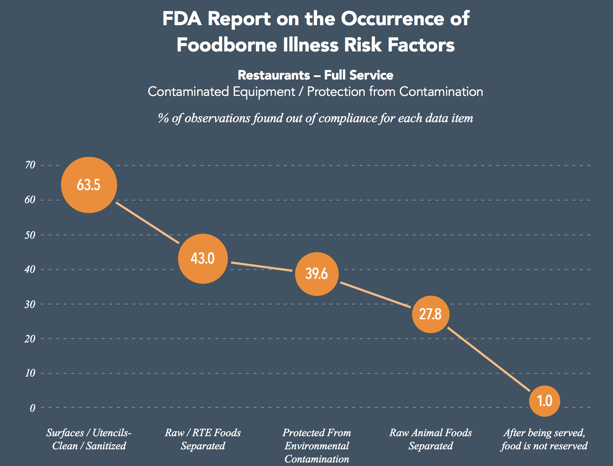
FDA Study detailing contaminated equipment test results in full service restaurants.
In 2008, the FDA did just that. Its National Retail Food Team conducted the final phase of a 10-year study which collected inspection data from foodservice and retail food establishments at five-year intervals. Specifically, the study identified five risk factors associated with foodborne illness outbreaks at these types of facilities:
- Improper Holding/Time and Temperature
- Poor Personal Hygiene
- Contaminated Equipment/Protection from Contamination
- Food from Unsafe Sources
- Inadequate Cooking
Study results revealed that the first three risk factors scored high “Out of Compliance” percentages. Let’s take a closer look at each one.
Holding/Time and Temperature
For the Holding/Time and Temperature risk factor, the high percentage “Out of Compliance” values were most commonly associated with:
- Improper cold holding of potentially hazardous food (PHF)
- Time-temperature control for safety (TCS) food
- Inadequate date marking of refrigerated, ready-to-eat PHF/TCS food
Poor Personal Hygiene
For the Poor Personal Hygiene risk factor, adequate handwashing had the highest percentage “Out of Compliance” value for every facility type. Values for this data item ranged from approximately 18% for meat departments to approximately 76% for full service restaurants.
Contaminated Equipment/Protection from Contamination
For the Contaminated Equipment/Protection from Contamination risk factor, improper cleaning and sanitizing of food-contact surfaces before use had the highest percentage “Out of Compliance” value in 8 out of 9 facility types. Values for this data item ranged from 18% in seafood departments to 64% in full service restaurants.
Results? Hire a Certified Food Protection Manager
The FDA study results indicate that the presence of a Certified Food Protection Manager is positively correlated to the overall “In Compliance” percentages, especially in
- Delis
- Full service restaurants
- Seafood departments
- Produce departments
Now that’s as specific a recommendation as you can get!
Read our Food Safety e-Book
Do you have other questions about restaurant food safety? Please read our e-book, Food Safety: Fact or Fiction? It highlights the most common sources of food contamination and offers recommendations to help protect your establishment.