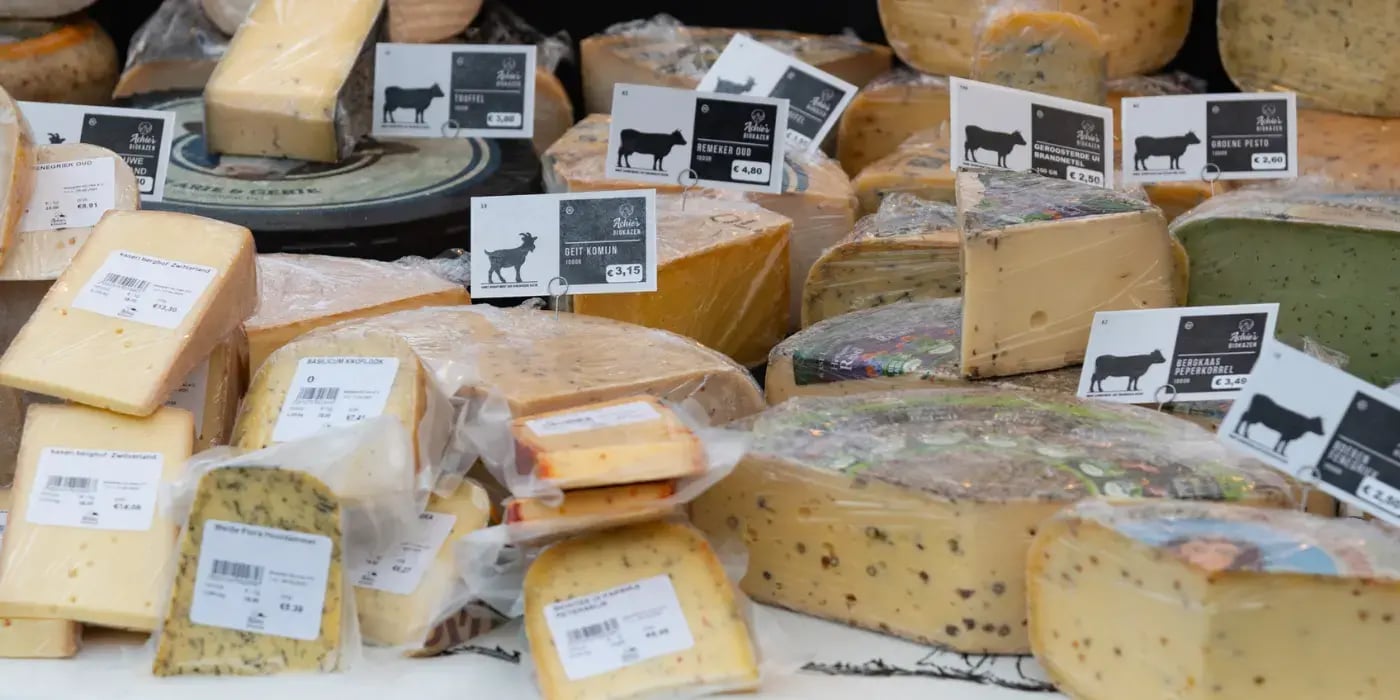
Labeling is a vital task for any business that handles physical products or assets. Whether it is a retail store marking prices, a restaurant labeling food for safety and freshness, or a manufacturing plant tracking parts and inventory, the importance of accurate labeling cannot be overstated. Yet despite how critical it is, manual labeling remains one of the most time-consuming and error-prone tasks in daily operations.
The labeling challenge
Every day, across thousands of kitchens, warehouses, and retail floors, employees are writing labels by hand, printing them individually, and applying them to products under the pressure of a busy shift. It is a process that has changed very little in decades, and the cracks are showing.
Traditional labeling is laborious and prone to mistakes. Incorrect dates, illegible text, and missed items are all common outcomes of a system that relies too heavily on human consistency. According to a survey of 300 manufacturing IT directors, 76% of organizations report that more than 10% of their goods are mislabeled each year, costing an average of $65,000 annually in direct losses alone.
For food service businesses, the stakes are even higher. The USDA's food product dating guidelines make clear that accurate date labeling is essential not just for compliance, but for consumer safety. Maintaining consistency across employees and shifts adds another layer of difficulty that manual systems simply were not built to handle.
SmartSense's labeling system: a game changer
The good news is that labeling does not have to work this way. SmartSense's Labeling System was built specifically to address these challenges and bring a new standard of efficiency, accuracy, and control to the labeling process.
Speed and efficiency
Time is one of the most valuable resources in any operation. Instead of manually writing or printing individual labels one at a time, SmartSense's labeling system allows teams to generate and print multiple labels at once, in seconds. The result is a significant reduction in the time spent on labeling tasks, freeing staff to focus on the work that actually moves the business forward. As part of SmartSense's broader digital food safety platform, the labeling system is built to fit seamlessly into existing workflows, not disrupt them.
Accuracy and consistency
Accuracy in labeling is not a nice-to-have. It is a responsibility. SmartSense's labeling system ensures that every label is accurate and consistent, drawing from predefined templates that eliminate the risk of incorrect information or inconsistent formatting. Every employee, on every shift, produces the same professional, readable label. That consistency protects customers, supports compliance, and builds trust in your brand.
Flexibility and customization
No two businesses label things exactly the same way. SmartSense's labeling system recognizes that, offering the ability to design and print exactly the labels your operation requires. Whether the need is price tags, food safety labels, or inventory tags, the system adapts to fit. As your business grows or your requirements change, the system grows with you.
Make labeling the easiest part of your day
The businesses that thrive are the ones that find ways to turn routine tasks into reliable systems. Labeling is no exception. With SmartSense's labeling system, what was once a source of daily friction becomes a streamlined, accurate, and manageable part of operations.
Request a demo to see SmartSense's labeling system in action.
Frequently asked questions
What is a food safety labeling system?
What is a food safety labeling system?
A food safety labeling system is a tool that helps food service businesses generate, print, and manage labels for prepared foods, including expiration dates, prep times, and ingredient information. Modern systems like SmartSense automate this process digitally, replacing handwritten or manually printed labels with accurate, consistent output that reduces the risk of foodborne illness and keeps businesses compliant with FDA requirements.
How do restaurants manage date labels and expiration tracking?
How do restaurants manage date labels and expiration tracking?
Traditionally, restaurants relied on handwritten day dot labels or color-coded sticker systems to track when food was prepared and when it expires. These manual methods are prone to errors and inconsistency across shifts. SmartSense's labeling system automates date and time calculations, prints labels on demand, and ensures every item leaving the kitchen is accurately labeled regardless of who is working.
What are the benefits of automated labeling for restaurants and retail?
What are the benefits of automated labeling for restaurants and retail?
Automated labeling reduces the time staff spend writing or printing individual labels, eliminates common errors like incorrect dates or missing information, and ensures consistency across locations and shifts. For businesses in food service, retail, and manufacturing, it also supports regulatory compliance and reduces the risk of costly recalls or health code violations.