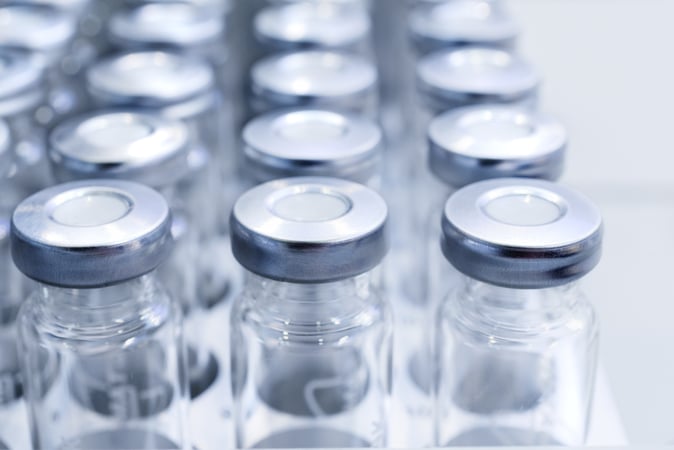
Pharmaceutical companies increasingly produce new drugs and vaccines at high cost. To protect your investment of time and money, preventing loss of potency is essential. A best practice to ensure proper administration of your products is to maintain their optimal temperatures during operations that involve storage and transit and require commercial refrigeration. What are the risks of improper commercial temperature monitoring? Sometimes manufacturers prefer the least restrictive storage conditions possible. Although that preference may benefit your marketing and sales divisions in the short term, a lack of rigorous standards can seriously compromise a product’s safety and efficacy. In fact, according to a recent commercial temperature monitoring study, chemical analyses have revealed …
Articles from SmartSense by Digi
Recent Posts

Food safety is not optional. That should probably go unspoken. But, as we know, state and local regulations meet only minimum requirements. That’s why it’s important to become an internal food safety advocate within your company. Know your own risks, set your own expectations, hold your staff accountable and most importantly, lead by example. Make your food safety system as foolproof as possible How can you help ensure food safety at a minimal investment? Consider these action items: Train your employees about proper temperature monitoring. Incorporate food safety topics into your daily conversations. Collect data that is useful—and that you will actually use. Incorporate traceability into your inventory control operations. Get to know and keep up to date with food industry trends. …
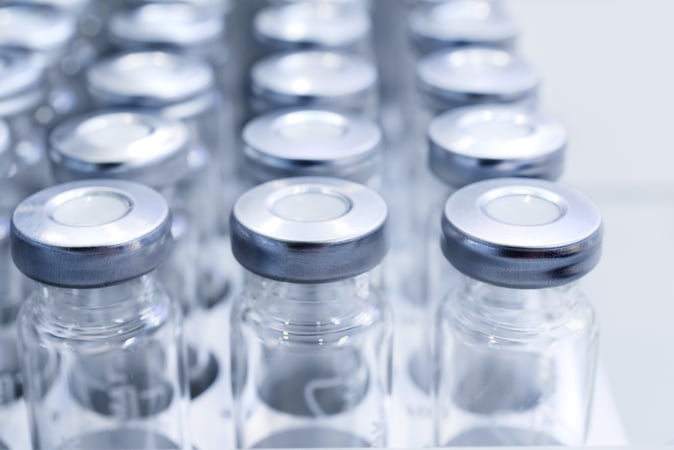
Pharmaceutical companies share a duty to ensure that their drugs are kept in an environment that maintains their efficacy. Although USP sets standards for the proper storage and distribution of medicines, many state boards of pharmacy follow these guidelines erratically. Since many drugs become unstable at high temperatures, keeping them within the proper “cool” or “cold” range is essential. “Cold” Has No Absolute Value Labels often state that medications should be stored in a “cold” or “cool” place; however, these terms are subject to interpretation. USP defines “cool” as any temperature between 8°C and 15°C. Consequently, USP defines “cold” as any temperature between 2°C and 8°C. The majority of state boards of pharmacy comply with the USP guidelines, but not all. Boards that don’t …

Choosing a reputable supplier is no small task. The safety and quality of your final food product is ultimately dependent on both the ingredients themselves and on the best practices of the supplier. Let’s take a look at some helpful recommendations for choosing the right suppliers. Selecting Suppliers Based on Food Safety Best Practices A supplier’s food safety practices should be a metric used just as much as price to determine its viability. When measuring the value of your suppliers’ practices, be proactive: Hold your suppliers accountable Validate their accreditations Get to know their capabilities Inspect the facility where the ingredients are produced Request, inspect, and evaluate a sample (including temperature) By taking the lead, you ensure that suppliers meet your standards, …

Surveys frequently show that most consumers believe locally sourced foods are safe from foodborne illness. Consumers are not alone - many industry professionals believe this too. Yet both groups may be subscribing to a myth. In this post, we’ll take a look at the case study of raw oysters to uncover how local, high-end suppliers can also be victims of contamination. Raw Oysters and Norovirus In 2016, Food Safety News reported that Oregon Oyster Farms Inc. of Newport, Oregon issued a voluntary recall of fresh shucked oysters contaminated with norovirus. Of 17 consumers who fell ill, one was hospitalized. Clearly, eating raw oysters still presents risks. The contaminated oysters were sold to restaurants, retailers, and wholesalers in Oregon, New York, and Massachusetts. Such widespread …
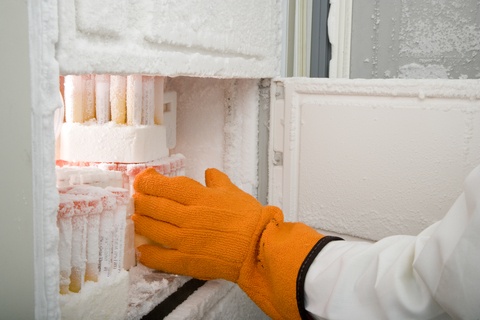
Pharmaceutical companies typically spend 15 years and $1 billion developing a successful drug or vaccine. In fact, for every 1,000 compounds initially developed, only 1 makes it to market. Given these costs and risks, drug company leaders need to direct more attention than ever toward the appropriate storage and transit of pharmaceutical products to maintain their integrity. Cold Chain Distribution: Not as Simple as it Seems Preserving the high quality of your products depends significantly on how you maintain their transportation and storage temperatures along the “cold chain.” In its simplest form, the product ships directly from manufacturer to end user or customer. In reality, however, the chain is rarely this short (see figure below). Distribution usually requires many storage …