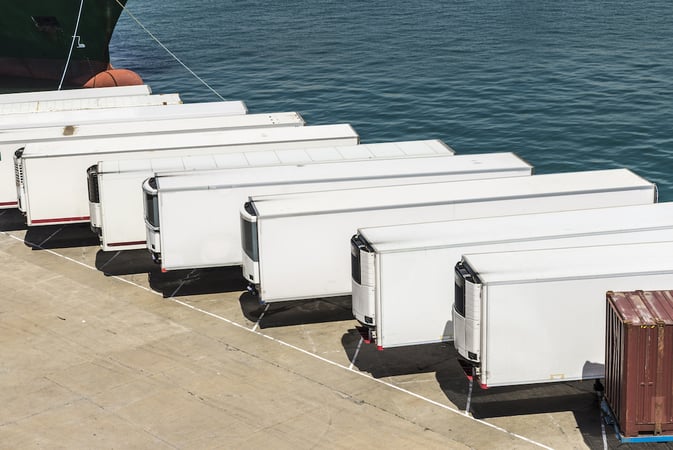
The cold chain refers to temperature-controlled logistics of perishable commodities that require a specific climate. More specifically, cold chain temperature monitoring refers to all of the equipment and resources that are utilized along the supply chain of transport from point-of-origin to the point of final delivery. It includes transportation assets such as refrigerated containers or railcars, as well as other cold chain transportation vehicles that eventually end up in storage and distribution facilities that handle the product before it reaches the consumer. This complicated chain of events requires numerous elements to building effective cold chain management. Cold Chain Temperature Devices for Logistics Operations First, an effective cold chain should incorporate innovative …
Connected Insights Blog

October is American Pharmacists Month! In honor of all those who provide life-saving therapeutics to ensure the public health, we’re posting a 3-part series profiling heroes who made history with their enormous contributions to the pharmaceutical industry. In this post, we celebrate Felix Hoffman, the German chemist who famously synthesized aspirin, one of the most widely beneficial drugs ever produced. Hoffman Joins the Bayer Company Felix Hoffmann (21 January 1868 – 8 February 1946) was born in Germany. The son of a manufacturer, at a young age he was introduced to the science of chemical processes in his family’s factories, which led to his interest in pharmaceuticals. Felix Hoffman. Source: https://en.wikipedia.org/wiki/Felix_Hoffmann Hoffman set out to learn his trade by working in …

Each year the Kentucky Derby features a field of horses that compete with all eyes on them from viewers located all over the world. But how do all those horses get there? Transporting horses is a viable transportation niche that only a few companies enter into. Indeed, this cargo is fragile and requires well-planned operations to transport them safely. In an article in Forbes, they described the complex operation of transporting horses by illustrating how the animals are loaded onto trailers and travel from farm or stable to a nearby airport that has special facilities for livestock transportation. Horses traveling via DHL. Source: https://www.forbes.com/sites/arianarockefeller/2018/12/20/when-horses-fly-the-business-of-equine-air-travel/#405624163197 Fragile Transportation One of the …

21st century consumers care more about sustainable business practices than ever before – Millennials in particular. By 2025, this generation will represent 75% of the workforce and will have $2.75 trillion in spending power globally. A recent Nielsen global online study found that Millennials are most willing to pay extra for sustainable offerings – almost three-out-of-four respondents in the latest findings, up from approximately half in 2014. “Brands that establish a reputation for environmental stewardship among today’s youngest consumers have an opportunity to not only grow market share but build loyalty among the power-spending Millennials of tomorrow.” – Grace Farraj, SVP, Public Development & Sustainability, Nielsen Not only do Millennials want good food, they also want …

October is American Pharmacists Month! In honor of all those who provide life-saving therapeutics to ensure the public health, we’re posting a 3-part series profiling heroes who made history with their enormous contributions to the pharmaceutical industry. We begin with Henry Banting, a Canadian medical scientist, physician, and Nobel laureate who developed the extraction of insulin into a practical treatment for diabetes, marking one of the biggest medical discoveries of the 20th century. The Problem of the Pancreas Sir Frederick Banting (November 14, 1891 – February 21, 1941) received his M.D. from the University of Toronto in 1921. Once he began practicing medicine, he became fascinated about diabetes. While preparing for a lecture on the pancreas, he thoroughly reviewed all previous …

There was once a large grocery chain with over 1,000 retail locations who wanted to improve its business. Competition was growing, labor costs were increasing, and they needed to operate more intelligently than they had previously. Leadership was frustrated with the limited visibility they had into store operations. Management was frustrated with the time employees spent on routine, non-customer facing activities. All of this is to say that they knew there was a better way. Their business was complex, making it challenging to optimize store operations at scale. With three different store formats, dozens of makes and models of equipment, a varied mix of employee skill levels, and a broad range between their best and worst performing stores, this grocery store had an uphill battle. Their …