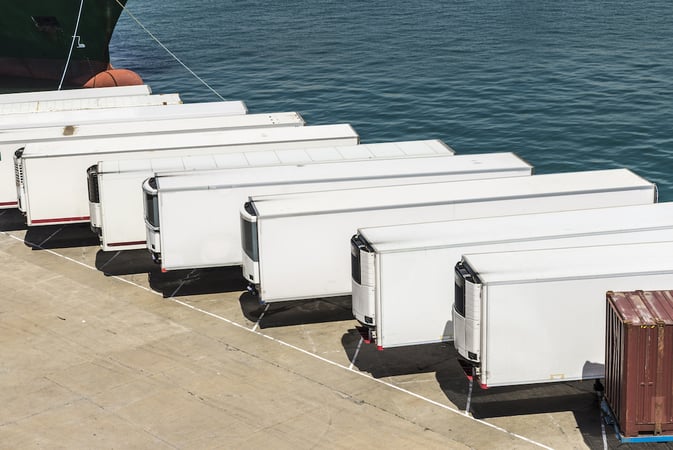
The cold chain refers to temperature-controlled logistics of perishable commodities that require a specific climate. More specifically, cold chain temperature monitoring refers to all of the equipment and resources that are utilized along the supply chain of transport from point-of-origin to the point of final delivery. It includes transportation assets such as refrigerated containers or railcars, as well as other cold chain transportation vehicles that eventually end up in storage and distribution facilities that handle the product before it reaches the consumer. This complicated chain of events requires numerous elements to building effective cold chain management. Cold Chain Temperature Devices for Logistics Operations First, an effective cold chain should incorporate innovative …
Posts about Supply Chain (9)

Each year the Kentucky Derby features a field of horses that compete with all eyes on them from viewers located all over the world. But how do all those horses get there? Transporting horses is a viable transportation niche that only a few companies enter into. Indeed, this cargo is fragile and requires well-planned operations to transport them safely. In an article in Forbes, they described the complex operation of transporting horses by illustrating how the animals are loaded onto trailers and travel from farm or stable to a nearby airport that has special facilities for livestock transportation. Horses traveling via DHL. Source: https://www.forbes.com/sites/arianarockefeller/2018/12/20/when-horses-fly-the-business-of-equine-air-travel/#405624163197 Fragile Transportation One of the …

There was once a large grocery chain with over 1,000 retail locations who wanted to improve its business. Competition was growing, labor costs were increasing, and they needed to operate more intelligently than they had previously. Leadership was frustrated with the limited visibility they had into store operations. Management was frustrated with the time employees spent on routine, non-customer facing activities. All of this is to say that they knew there was a better way. Their business was complex, making it challenging to optimize store operations at scale. With three different store formats, dozens of makes and models of equipment, a varied mix of employee skill levels, and a broad range between their best and worst performing stores, this grocery store had an uphill battle. Their …
The next big movement in telematics for the logistics industry could be a combination of hardwired sensors and supply chain monitoring platforms all together in what is now becoming a new phenomenon: a digital twin. What Is a Digital Twin? A digital twin is a software model of a physical asset, equipment, system, or any combination of these things. It could be a model of a transportation supply map. It could be a very delicately modeled long-haul truck with cargo inside of it. Or it could be a jet engine. A digital twin is a virtual model of an asset and acts as a snapshot of that physical asset in real time, only with digital attributes. Manufacturing process digital twin model. Source: https://www2.deloitte.com/us/en/insights/focus/industry-4-0/digital-twin-technology-smart-factory.html …
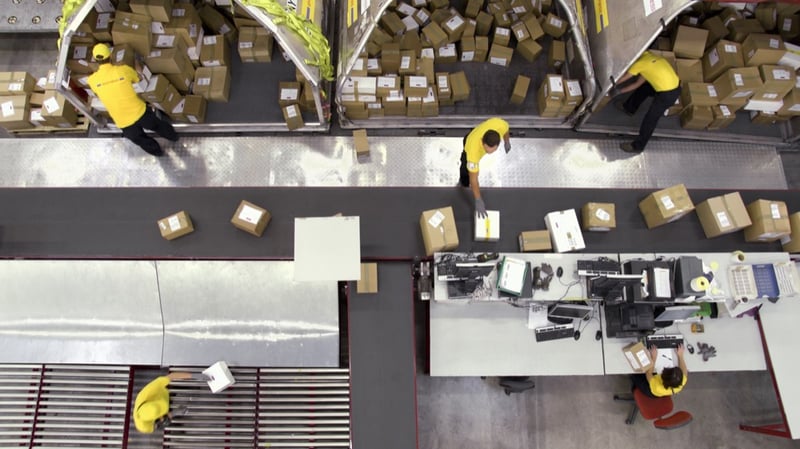
The thin line that separates logistics and supply chain management might be a little hazy, and most often these concepts are intertwined. Logistics, supply chain, transportation - are all descriptors, among many, of a new sector of global and emerging commerce that has moved to the forefront of global business in today’s worldwide economy. But what exactly is the difference between “logistics” and “supply chain management?” The Evolution of Supply Chain Management First, let’s look back in time and understand the evolution of supply chain management and how it became a sector of the modern-day enterprise. According to the consultant Cerasis, roots in logistics can be traced in both engineering and operations research. In the 1940’s during World War II, scientists used analytics to study …

According to the Art Basel and UBS Global Art Market Report 2019, there’s been an uptick in global art sales of about 6% since the previous year. Auction sales and art fairs are part of the mix in driving the overall volume of art sales upward. This means there will likely be a focused surge in the transport of artwork in a remarkable feat of moving some of the world’s most valued treasures around the world. Even if the surge of art sales alone won’t boost the international transport of fine art, the exchange and loan of paintings from museum to museum, collectors to exhibits, and others who wish to share their treasures with others are part of the worldwide volume of art transportation and logistics. What’s It Like To Ship Art? The process of moving art begins before it's even touched. …