For the rules that apply now, start with Key Federal Food Safety Laws: A Complete Compliance Guide (Updated 2026). In just the last couple of months, we’ve been reading reports about one new food recall after another: Listeria in smoked salmon, E.coli in ground beef, and undeclared allergens in P.F. Chang’s frozen entrees – and that’s not an exhaustive list. These ongoing incidents have once more raised the question among health experts of just how safe our food is since passage of the Food Safety Modernization Act (FSMA) in 2011. For instance, Civil Eats recently hosted a roundtable discussion with leading food safety advocates about this very topic, and with good reason. After all, the very cause of FSMA was the federal government’s response to a similar wave of foodborne illnesses, …
Posts about Supply Chain (8)

Over the past few decades, the supply chain market and logistics industries have gone through a makeover. It’s had a name change. It’s been recognized as a science and discipline - certainly more than in the past. And it’s risen to the forefront of many C-suites, as leadership can talk to it readily as an integral part of corporate strategy for the operations of many successful companies. A Bullpen for the C-Suite? Looking forward, tomorrow’s CEOs may come from the ranks of supply chain management. Recently Nader Mikhali wrote in Fortune that the next generation CEO just may come from a place not known for cultivating CEOs: the supply chain suite. When the supply chain suite becomes a fast track to the C-suite, something has changed. Mikhali presents Amazon and its remarkable supply chain …
During the holiday season, Americans throw out 25% more trash than the rest of the year. As you can imagine, Thanksgiving is the holiday triggering the highest percentage of food as part of this waste. If this year mirrors past statistics, we will collectively discard 35% – or 204 million pounds – of edible turkey meat. More than 150 million pounds of potatoes, green beans and other vegetable sides will find their way to the trash bin. And an estimated 14 million pounds of dinner rolls will be dumped into landfills. The Impact of food waste during Thanksgiving. Source: https://www.uschamberfoundation.org/blog/post/impact-food-waste-during-thanksgiving Imagine not just the sheer size of those numbers, but what that waste is doing to our environment: a million metric tons of greenhouse gas …
There's probably no greater retail revolution in our lifetime than Amazon’s remarkable ability to offer every product and numerous services you may need. Despite adding its Prime Day delivery and ambitious and aggressive promises, they seem to be holding their word well. But think of the increase in the number of parcels that are delivered to your doorstep every day due to the Amazon effect. Who delivers all those parcels? In the beginning, there was only the United States Postal Service (USPS) and a few carriers. The USPS, after all, has been the legacy delivery service for parcels and packages throughout the country since 1775. But things changed as e-commerce began to grow its own legs and accelerate into the behemoth that it is today. USPS drop-off locations. Entrepreneurial Pursuit …
In our previous post about inventory management during Thanksgiving, we touched on the importance of turkey as the key food product most in need of careful advance planning to optimize stock. In this post, we’re taking a deeper dive into the safety issues turkey raises along the cold chain. Every year, a significant number of consumers acquire foodborne illnesses during the holiday season. Just last year, 22 turkey slaughter operations and seven processing facilities were contaminated with a deadly strain of Salmonella. The CDC reported that 164 people across 35 states were confirmed infected and more than 60 admitted to hospitals, where at least one died. Faced with these statistics, grocery stores are under enormous pressure to ensure a safe Thanksgiving. All it takes is one scary …
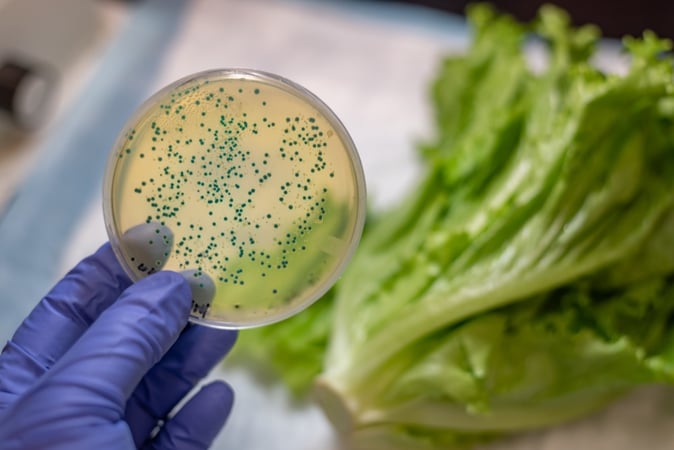
Recently, hundreds of pounds of salad from Whole Foods, Trader Joe's, and Walmart were recalled due to concerns about salmonella and listeria contamination. The food supplier was a California-based company that was responsible for recalling some 2,811 pounds of ready-to-eat salads. What Is The Difference Between a Recall and an Outbreak? According to the U.S. Department of Agriculture, a food recall occurs when there's some reason to believe that a food might cause consumers to become ill; in the case of the salad it was salmonella or listeria that could cause food poisoning and other subsequent illnesses. A food producer initiates the recall to take the products off the market immediately to avoid further health problems and to protect their liability. In some situations, food recalls …