
The global healthcare industry is undergoing a fundamental transition from a volume-based to a value-based approach to doing business for two primary reasons. One, consumers are demanding enhanced healthcare quality, especially given the high cost of insurance. Two, healthcare providers are under greater regulatory pressures to deliver better outcomes than ever before. In addition to these pressures, healthcare organizations are also facing unprecedented challenges to maintaining their standards for safety and quality: Labor shortages: Overworked healthcare professionals are required to do more with less, which increases the potential for compliance gaps despite their best efforts. New forms of healthcare delivery: The increasing complexity of medications, vaccines, biologics, and …
Articles from SmartSense by Digi
Recent Posts
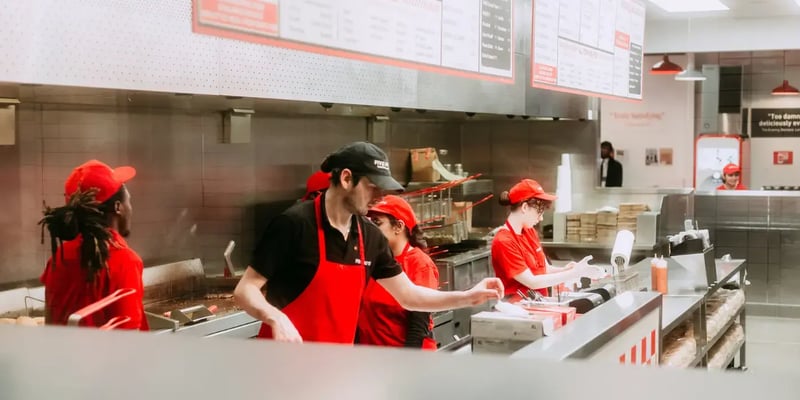
In the quick service restaurant business, speed is a crucial component. Customers walk through the door expecting hot, fresh, accurate food delivered without delay. When that expectation is met, they come back. When it is not, they leave and often do not return. Wait time-related reviews among QSR customers increased by 8.5% in 2024, with nearly 36% of customers reporting that their orders took a long time. In a market where 80% of QSR customers say they value order accuracy and speed equally, falling short on either means losing ground to competitors who have figured out how to deliver both. Speed must be paired with accuracy. The real goal for every QSR is quick, fresh, hot, and accurate. Speed without accuracy is just a faster way to disappoint a customer. Technology is the bridge …

Every business has a version of the same problem. Tasks that need to happen every day, at the right time, in the right order, completed by the right person. In a restaurant, that might be a morning food safety check or a closing cleaning log. In a retail store, it might be a price verification sweep or an inventory count. In a manufacturing facility, it might be a safety inspection or a shift handover record. The details differ. The challenge does not. For decades, businesses have relied on paper checklists and spreadsheets to manage these routines. And for decades, the same problems have followed. Lost records. Skipped steps. Inconsistent execution. Managers spending more time chasing accountability than running their operations. The tools were never built for the pace of modern …

Every retail and restaurant operator knows the feeling. You get to the end of the month, pull the labor report, and the number is higher than it should be. Someone worked overtime three times. Two shifts were overstaffed on a slow Tuesday. A last-minute call-out on a Friday night turned into an emergency scramble that cost twice what it should have. The schedule was the culprit. And it almost always is. Labor is the single largest controllable expense in retail and restaurant operations. Industry benchmarks from VantaInsights put average restaurant labor costs at 25 to 35% of revenue, and in an environment where margins are thin and every percentage point counts, getting the schedule right is not an administrative task. It is a financial strategy. Yet for most businesses, scheduling is …

Self-training tools improve employee retention in retail by giving people the procedures they need on their own schedule, so a new hire can learn the job without waiting on a manager in the middle of a rush. Employees stay when they feel capable and trusted, and when they can see the company invested in their success. A new hire walks into their first shift at a busy restaurant. The manager is already stretched thin, the lunch rush is building, and nobody has time to walk them through every procedure from scratch. The new employee does their best, but they feel lost. Two weeks later, they are gone. It is a story that plays out thousands of times a day across the retail and restaurant industry, and the cost is staggering. Homebase reports that the restaurant industry's annual turnover rate …

Manufacturing has always been a discipline of precision. The right parts, in the right place, at the right time, are handled by the right people. When any one of those variables slips, the consequences ripple through the entire operation. A missed shift creates a staffing gap. The staffing gap slows production. A slower line costs money that cannot be recovered. The industry knows this pressure well. The U.S. manufacturing sector faces a net need for as many as 3.8 million jobs between 2024 and 2033, with nearly half of those positions at risk of going unfilled. In an environment where labor is already stretched thin, the tools a manufacturing operation relies on to manage its people and processes have never mattered more. This is where SmartSense and its Jolt-powered solutions step in. A …