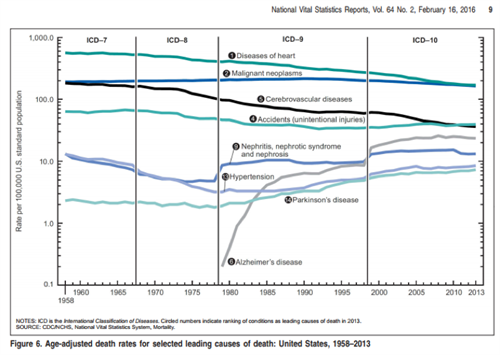
Clinical trials are the lifeblood of the pharmaceutical industry. Without successful new drug development, brands would become commoditized as patents expire and low-cost generics enter the market. To understand where new drug development is concentrated, we must look at the leading causes of death. The 2016 CDC National Vital Statistics Report, Deaths: Final Data for 2013, calculates the 15 leading causes of death in the U.S. in 2013: Diseases of heart (heart disease) Cerebrovascular diseases (stroke) Alzheimer’s disease Diabetes mellitus (diabetes) Influenza and pneumonia Nephritis, nephrotic syndrome and nephrosis (kidney disease) Intentional self-harm (suicide) Septicemia Chronic liver disease and cirrhosis Essential hypertension and hypertensive renal disease (hypertension) …
Articles from SmartSense by Digi
Recent Posts
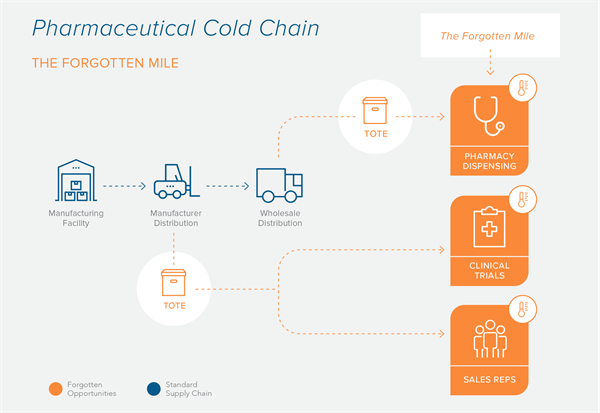
The CDC recommends that medications be kept within specific refrigerated and frozen temperature ranges to ensure safety and efficacy (Vaccine Storage and Handling Toolkit). Drug manufacturers are well aware of these recommendations and take precautions to properly store their medications. However, there is a link in the Cold Chain that is often overlooked. We refer to that missing link as the “Forgotten Mile.”The Forgotten Mile is the section of the cold chain where pharmaceuticals are stored for clinical trials, sales rep distribution, and pharmacy dispensing. Clinical Trials The majority of today’s Investigational Medicinal Products (IMPs) are temperature sensitive and require cold chain storage, particularly for oncology and large-molecule research. The success of a clinical trial …

For current practice, start with How to Integrate Supply Chain Tracking to Protect Perishable Assets in Transit. In our last post, we gave an overview of track and trace. This legislation is a critical step to improving the safety and efficacy of prescription drugs in the U.S. However, it alone may not be sufficient for all medications. In addition to trace and trace, manufacturer’s will need to consider cold chain custody tracking of temperature sensitive medications such as vaccines or insulin.Cold chain custody records are necessary to prevent temperature sensitive medications from losing efficacy or from becoming unsafe. Continuous temperature monitoring of refrigerated and frozen medications is necessary at the following points in the cold chain: Manufacturing Facilities Warehouses …
What is Track & Trace? Pharmaceutical track and trace legislation has arrived. Signed in 2013, Title II of the Drug Quality and Security Act outlines specific steps to build an electronic system to track and trace prescription drugs in the U.S.This legislation takes the long view toward drug safety. According to the FDA DSCSA Overview, the new system will: Enable verification of the legitimacy of a drug at the package-level Enhance detection and notification of illegitimate products in the drug supply chain Facilitate more efficient recalls This legislation is a critical step to ensuring the safety and efficacy of prescription drugs in the U.S. The law was supposed to go into force on July 1, 2015 but this was extended to March 1, 2016. The law requires the following key provisions be …
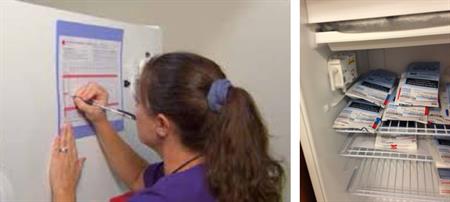
Many U.S. state regulations for pharmacies recommend monitoring prescription refrigerators and freezers twice per day, manually. This entails, a pharmacist reading a thermometer inside a fridge or freezer and recording it on a paper log, at the beginning and the end of the day. These daily logs are kept in files at the pharmacy for review during inspections. In the CDC Vaccine Storage and Handling Toolkit, the “CDC recommends the use of a continuous monitoring and recording digital data logger (DDL) with a current and valid Certificate of Calibration Testing (also known as a Report of Calibration), set at a minimum recording interval of at least every 30 minutes.” Left: Traditional paper temperature logs (VFC Toolkit image). Right: Wireless temperature sensor reads temperatures every 15 …

Many pharmacies, medical offices, and health clinics manually monitor temperature twice per day using a paper log. If the temperature at the time of the reading is within the desired range, 36°F - 46°F (2°C - 8°C) for refrigerators, -50°C - -15°C (-58°F - +5°F) for freezers, no action is taken.But what happens during the day when pharmacists and medical professionals are opening and closing the door? The room temperature may be higher or lower due to automatic control settings, or based on the number of people in the area. What about the operating cycles of the refrigerators and freezers? Twice per day, manual temperature readings cannot capture this information. One solution being deployed by major pharmacy chains is remote temperature monitoring using wireless sensors. Unlike manual …