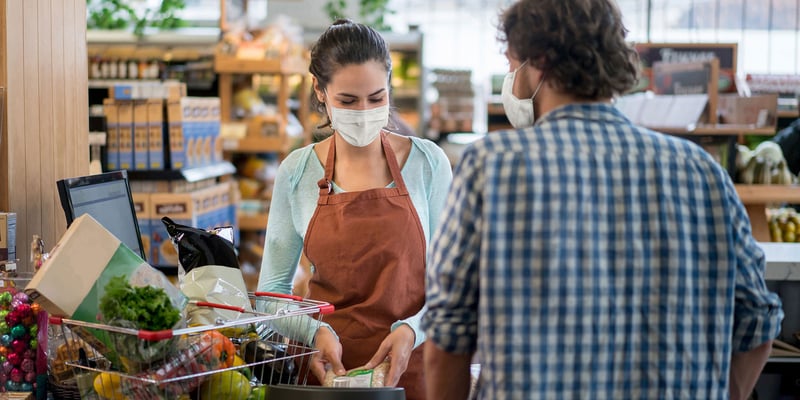
This post is the first in a series of three that look at how the grocery sector is dealing with the legacy of COVID-19 in a post-pandemic market. In this first post, we focus on the broken supply chain and see how the public sector is trying to fix it, in large part by recommending digital technologies. In the second post, we survey how grocers are committed to sustainability goals despite the ongoing challenges of the pandemic, especially in light of climate change. And in the third post, we’ll demonstrate that the time has never been better to accelerate the digital transformation of every aspect of the grocery sector, for customers, in-store employees, and supply chain partners. Since the onset of the coronavirus pandemic in 2020, grocery stores have been obliged to remain open as other retail businesses shut their doors or reduced hours significantly. That's because, like medical clinics and hospitals, food retail is an essential service, tasked with providing a population at risk of illness with a healthy diet. After all, while you can put off a haircut or manicure, you can't go without nutritious food. Since the onset of the coronavirus pandemic in 2020, grocery stores have …
Posts about Grocery (3)

As Thanksgiving Day approaches and grocery stores gear up to provide shoppers with all their holiday favorites – turkey, potatoes, green beans, pumpkins, and cranberries – most consumers don’t think about the immensely complex supply chain that delivers all these goodies to their tables. Come to think of it, many store employees probably aren’t fully aware of just how much is involved: from production on the farm and processing at manufacturing plants to transportation over long highways and final sale at the supermarket. This year, more than 250 million Americans will celebrate Thanksgiving. That adds up to $2.375 billion spent on food for a traditional dinner – an almost incomprehensible amount of stock to plan for in advance. The very idea of a 21st century Thanksgiving meal is not possible without the tireless efforts of the logistics industry and its supply chain partners to ensure grocers have what they need to provide consumers with a positive shopping experience throughout the entire holiday season – without either running out of food or wasting it because of excess inventory. The numbers behind the Thanksgiving Feast. Source: …
Amazon GO is the latest innovation in the master plan of CEO Jeff Bezos to compete in the brick-and-mortar retail business. The new chain’s gimmick? No checkout, no lines, just shop and go! If it sounds like a 3D version of Amazon.com, that’s intentional. The concept of the new chain is touted by Bezos as ‘revolutionary” in its use of smartphone and geofencing technologies to streamline the customer experience. Certainly, Amazon GO’s technology is state-of-the art and unprecedented in the food service industry. Nevertheless, the “cashierless concept” has been in use for years at Apple stores for products priced less than $100. Neither is the technology itself new but derived from self-driving cars. So, if not all that revolutionary in conception, with Bezos behind it, the GO concept could very well disrupt the economics of retail if the chain massively expands or its model is appropriated by Amazon’s competitors. So, the question remains: is Amazon GO the future of shopping? The New Retail Experience: “Just Walk Out Shopping” The Amazon GO experience is described on the company website as “Just Walk Out Shopping.” That may be true, but it’s a rather big “just.” To participate …

“Is my food safe? Is it being stored and handled properly to ensure compliance?” You’re likely in the dark on the answers to these questions across all of your organization’s locations. This article highlights the most common sources of food contamination and offers recommendations to better protect your restaurant Fact or Fiction? My Employees Always Wash Their Hands When Required The Facts: Handwashing is one of the most frequently cited violations in health inspection reports. This includes employees not washing their hands, lack of handwashing supplies, blocked access to sinks, or the absence of a dedicated handwashing basin. All leading to a recipe for contamination. A recent CDC Study investigated how restaurant traits, policies, and practices were linked to food-borne illness outbreaks and to infected food workers as the cause of outbreaks. State and local environmental health specialists evaluated Public Health Inspection Report Employee failed to wash hands when required Operator failed to provide separate handwashing sink(s) Operator failed to provide handwashing supplies Food handler failed to wear headgear Action: Notice to comply, assess on re-inspection Food Premises …